Kies je regio

Selecteer de regio die het beste past bij je locatie of voorkeuren.

Kies je sitetaal

Deze instelling regelt de taal van de gebruikersinterface, inclusief knoppen, menu's en alle tekst op de site. Selecteer je voorkeurstaal voor de beste browse-ervaring.

Kies de talen voor vacatures

Selecteer de talen voor vacatures die je wilt zien. Deze instelling bepaalt welke vacatures aan jou worden getoond.
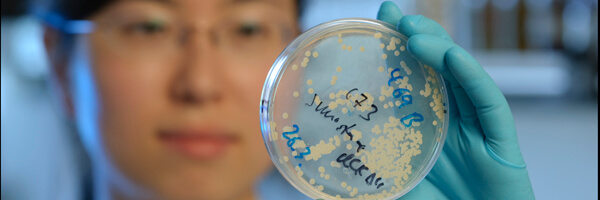
Max Planck Institute for Biophysical Chemistry (MPIbpc)

Max Planck Institute for Biophysical Chemistry (MPIbpc)

Website bezoeken

Over de werkgever

maxplanck-header_image
The research at the Max Planck Institute (MPI) for Biophysical Chemistry encompasses a wide spectrum of scientific topics and techniques. Of central concern is the mechanisms by which cells, organelles and biomolecules fulfill their manifold tasks. Ultra-high-resolution microscopy, nanotechnology, nuclear magnetic resonance spectroscopy, mass spectrometry and computer simulation are employed to delve ever-further into the nanocosmos of living cells. The institute's researchers investigate how spliceosomes correctly configure genetic information, how ribosomes synthesize proteins, how nerve cells communicate with one another via synapses, how cellular logistics are controlled or how protein aggregates damage cells. The study of the cellular cosmos is also intimately connected with the study of the organism. Scientists at the institute examine how living beings develop, how their sleep-wake cycles are controlled, how organ-specific stem cells are formed and in how far obesity and metabolic diseases are caused by genetic misregulation. The MPI for Biophysical Chemistry is also a pioneer in the development of methods of measurement and analysis which allow a clearer view into cellular life processes. Examples include far-field microscopy on the nanometer scale, magnetic resonance tomography and spectroscopy, optical spectroscopy and atomistic computer simulation. In all of its research, the institute pursues a strong interdisciplinary approach. The 12 departments and 24 independent research groups complement each other with regard to their orientations and methodology and collaborate extensively with one another, with other institutes around Göttingen, with the University of Göttingen as well as with colleagues nationally and internationally. The support of young scientists is also of primary importance to the institute, and is reflected in the large number of independent research groups. In addition, the independent research laboratory Biomedical NMR Research GmbH (headed by Prof. Jens Frahm) is affiliated with the institute.

Locatie werkgever

Dit vind je misschien ook interessant

Vergelijkbare vacatures

Dozent Soziale Arbeit Praxisreflexion (m/w/d)
Dozent Soziale Arbeit Praxisreflexion (m/w/d) IU International University of Applied Sciences 3 weken geleden
Doctoral Researcher in Mechanical Engineering
Doctoral Researcher in Mechanical Engineering University of Luxembourg 1 week geleden
Onderwijscoördinator
Onderwijscoördinator Eindhoven University of Technology 1 week geleden
SD-26070 SENIOR R&T SCIENTIST ON CHEMICAL RISK MANAGEMENT AND ASSESSMENT
SD-26070 SENIOR R&T SCIENTIST ON CHEMICAL RISK MANAGEMENT AND ASSESSMENT Luxembourg Institute of Science and Technology (LIST) 2 maanden geleden
PostDoc Researcher in the area of Machine Learning
PostDoc Researcher in the area of Machine Learning University of Applied Sciences and Arts of Southern Switzerland - SUPSI 3 dagen geleden
Postdoc Assistenzprofessur (m/w/d) für Hochbau und nachhaltige Entwurfsprozesse
Postdoc Assistenzprofessur (m/w/d) für Hochbau und nachhaltige Entwurfsprozesse University of Applied Sciences Upper Austria 1 maand geleden
Meer vacatures