Scegli la tua regione

Seleziona la regione che meglio si adatta alla tua posizione o alle tue preferenze.

Scegli la lingua del sito

Questa impostazione controlla la lingua dell'interfaccia utente, inclusi i pulsanti, i menu e tutto il testo del sito. Seleziona la tua lingua preferita per la migliore esperienza di navigazione.

Scegli le lingue per gli annunci di lavoro

Seleziona le lingue per gli annunci di lavoro che desideri vedere. Questa impostazione determina quali annunci di lavoro ti verranno mostrati.
Max Planck Institute of Molecular Plant Physiology (MPIMP)

Max Planck Institute of Molecular Plant Physiology (MPIMP)

Visita il sito web

Informazioni sul datore di lavoro

mpimp

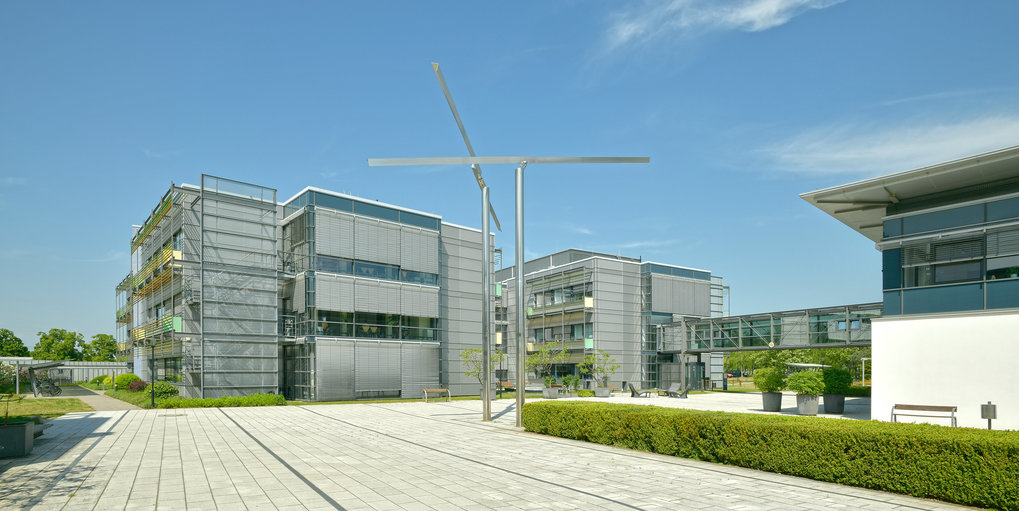
The Max Planck Institute of Molecular Plant Physiology (MPIMP) was founded after the German unification in 1994, as one of 18 institutes on the territory of the former GDR. The founding director was Prof. Dr. Lothar Willmitzer, who is the director of one of the three departments which have been established since then. From originally only 16 employees the institute grew into a large institute, which now employs about 360 people from all over the world, who put their combined efforts into elucidating the secrets of plants.

In the first years the scientists performed their research in buildings on the campus of the University of Potsdam. In 1999 the construction activities on the Max Planck Campus were completed and the MPI-MP, together with the Max Planck Institute of Colloids and Interfaces and the Max Planck Institute for Gravitational Physics, moved into their new buildings. The three institutes share a central building with a lecture hall, seminar rooms, administration offices and a cafeteria. Apart from that, they are completely independent from each other.

Science and Research

Since the institute was founded the main emphasis of the institute has shifted from the analysis of central metabolic pathways combined with the analysis of gene function to the development and implementation of phenotyping technologies and system approaches. This Systems Biology approach is driven by a close interaction between experimental and computational scientists who work side by side in the institute. The MPI-MP investigates metabolic and molecular processes in cells, tissues, organs and whole plants. The overall goal is to understand how growth and metabolism are regulated, to learn how they respond to environmental factors, and to unravel genetic factors that underlie these processes and responses. To achieve this, it is not only necessary to understand the functions of individual genes, but also the molecular details of individual processes like the uptake of nutrients, the structure, storage, transport and mobilisation of plant components, and the regulation of individual processes. It is also essential to learn how these different processes interact in networks, and to develop approaches that provide quantitative information and a predictive understanding of these complex networks.  More information about the research interests of the various groups can be found in the Research section of this website.

Sede del datore di lavoro

Trova datori di lavoro affini

Fraunhofer-Gesellschaft
Fraunhofer-Gesellschaft Germania 3 posizioni aperte
University of Cologne
University of Cologne Germania 35 posizioni aperte
Bergische Universität Wuppertal (BUW)
Bergische Universität Wuppertal (BUW) Germania 5 posizioni aperte
Forschungszentrum Jülich GmbH
Forschungszentrum Jülich GmbH Germania 3 posizioni aperte
Altri datori di lavoro

Questo potrebbe interessarti

Why KTH Is the Ideal Place to Shape the Future Through Your Work
Why KTH Is the Ideal Place to Shape the Future Through Your Work KTH Royal Institute of Technology 5 min. di lettura
Bringing Society’s Voice into Science
Bringing Society’s Voice into Science University of Oulu 5 min. di lettura
Bringing Artificial Intelligence Into the Real World
Bringing Artificial Intelligence Into the Real World Mohamed bin Zayed University of Artificial Intelligence (MBZUAI) 4 min. di lettura
Connecting the Dots With Life Course Epidemiology
Connecting the Dots With Life Course Epidemiology University of Oulu 4 min. di lettura
Altre storie