Elige tu región

Selecciona la región que mejor se ajuste a tu ubicación o preferencias.

Elige el idioma del sitio

Esta configuración controla el idioma de la interfaz de usuario, incluidos los botones, los menús y todo el texto del sitio. Selecciona tu idioma preferido para la mejor experiencia de navegación.

Elige los idiomas para los anuncios de empleo

Selecciona los idiomas para los anuncios de empleo que deseas ver. Esta configuración determina qué anuncios de empleo se mostrarán.
Max Planck Institute of Molecular Plant Physiology (MPIMP)

Max Planck Institute of Molecular Plant Physiology (MPIMP)

Visitar página Web

Sobre el empleador

mpimp

The Max Planck Institute of Molecular Plant Physiology (MPIMP) was founded after the German unification in 1994, as one of 18 institutes on the territory of the former GDR. The founding director was Prof. Dr. Lothar Willmitzer, who is the director of one of the three departments which have been established since then. From originally only 16 employees the institute grew into a large institute, which now employs about 360 people from all over the world, who put their combined efforts into elucidating the secrets of plants.

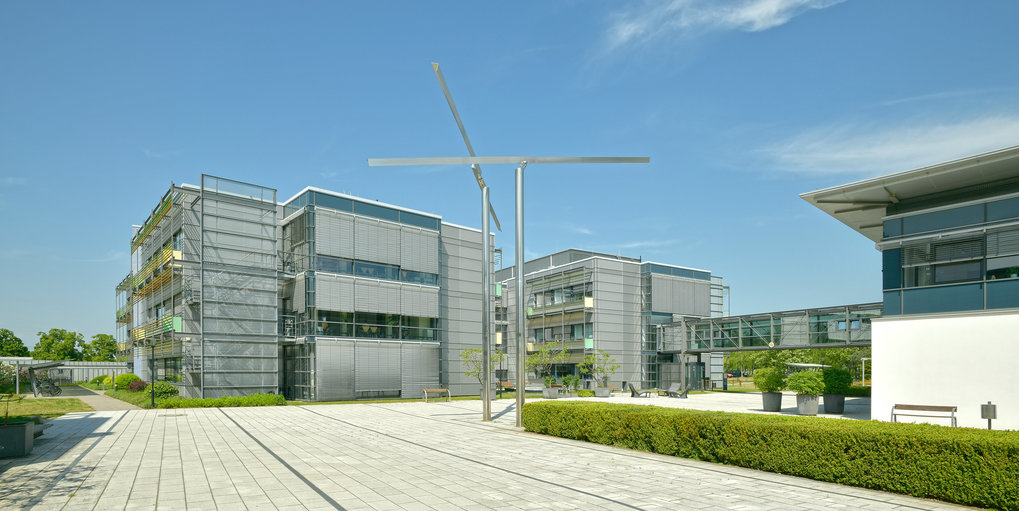
In the first years the scientists performed their research in buildings on the campus of the University of Potsdam. In 1999 the construction activities on the Max Planck Campus were completed and the MPI-MP, together with the Max Planck Institute of Colloids and Interfaces and the Max Planck Institute for Gravitational Physics, moved into their new buildings. The three institutes share a central building with a lecture hall, seminar rooms, administration offices and a cafeteria. Apart from that, they are completely independent from each other.

Science and Research

Since the institute was founded the main emphasis of the institute has shifted from the analysis of central metabolic pathways combined with the analysis of gene function to the development and implementation of phenotyping technologies and system approaches. This Systems Biology approach is driven by a close interaction between experimental and computational scientists who work side by side in the institute. The MPI-MP investigates metabolic and molecular processes in cells, tissues, organs and whole plants. The overall goal is to understand how growth and metabolism are regulated, to learn how they respond to environmental factors, and to unravel genetic factors that underlie these processes and responses. To achieve this, it is not only necessary to understand the functions of individual genes, but also the molecular details of individual processes like the uptake of nutrients, the structure, storage, transport and mobilisation of plant components, and the regulation of individual processes. It is also essential to learn how these different processes interact in networks, and to develop approaches that provide quantitative information and a predictive understanding of these complex networks.  More information about the research interests of the various groups can be found in the Research section of this website.

Ubicación de la empresa

Descubre empleadores similares

Fraunhofer-Gesellschaft
Fraunhofer-Gesellschaft Alemania 3 posiciones abiertas
University of Cologne
University of Cologne Alemania 28 posiciones abiertas
Bergische Universität Wuppertal (BUW)
Bergische Universität Wuppertal (BUW) Alemania 5 posiciones abiertas
Más empleadores

Esto puede ser de tu interés

Why KTH Is the Ideal Place to Shape the Future Through Your Work
Why KTH Is the Ideal Place to Shape the Future Through Your Work KTH Royal Institute of Technology 5 minutos de lectura
Bringing Society’s Voice into Science
Bringing Society’s Voice into Science University of Oulu 5 minutos de lectura
Bringing Artificial Intelligence Into the Real World
Bringing Artificial Intelligence Into the Real World Mohamed bin Zayed University of Artificial Intelligence (MBZUAI) 4 minutos de lectura
Connecting the Dots With Life Course Epidemiology
Connecting the Dots With Life Course Epidemiology University of Oulu 4 minutos de lectura
Más historias